4. Rows指定のSum関数(following指定とfollowing指定)
次に、Rows指定のSum関数(following指定とfollowing指定)と同じ結果を求めるSQLについてです。まずは、テーブルのデータと、出力結果を考えます。
IDTable
| ID | Seq | Val |
| AA | 1 | 100 |
| AA | 2 | 100 |
| AA | 3 | 500 |
| AA | 4 | 200 |
| AA | 5 | 200 |
| AA | 6 | 50 |
| BB | 1 | 200 |
| BB | 2 | 400 |
| BB | 3 | 800 |
| BB | 4 | 900 |
| CC | 1 | 100 |
| CC | 2 | 800 |
| CC | 3 | 700 |
| DD | 1 | 400 |
| EE | 1 | 50 |
| FF | 1 | 10 |
| FF | 3 | 20 |
| FF | 5 | 40 |
| FF | 6 | 80 |
同じIDで、Seqの昇順で、2行後から3行後までのValの合計を求めます。言いかえれば、Oracleの下記の分析関数を使ったSQLと同じ結果を取得します。
分析関数を使ったSQL
select ID,Seq,Val,
sum(Val) over(partition by ID order by Seq
              rows between 2 following
                       and 3 following) as sumVal
  from IDTable
order by ID,Seq;
出力結果
| ID | Seq | Val | sumVal |
| AA | 1 | 100 | 700 (500+200) |
| AA | 2 | 100 | 400 (200+200) |
| AA | 3 | 500 | 250 (200+50) |
| AA | 4 | 200 | 50 |
| AA | 5 | 200 | null |
| AA | 6 | 50 | null |
| BB | 1 | 200 | 1700 (800+900) |
| BB | 2 | 400 | 900 |
| BB | 3 | 800 | null |
| BB | 4 | 900 | null |
| CC | 1 | 100 | 700 |
| CC | 2 | 800 | null |
| CC | 3 | 700 | null |
| DD | 1 | 400 | null |
| EE | 1 | 50 | null |
| FF | 1 | 10 | 120 (40+80) |
| FF | 3 | 20 | 80 |
| FF | 5 | 40 | null |
| FF | 6 | 80 | null |
前問と似た考え方を使って答えは、下記となります。
相関サブクエリを使うSQL1
select ID,Seq,Val,
(select sum(b.Val)
   from IDTable b
  where b.ID=a.ID
    and exists(select 1 from IDTable c
                where c.ID=a.ID
               having count(case when c.Seq between a.Seq
                                                and b.Seq
                                 then 1 end)
                      between 2+1 and 3+1)) as sumVal
  from IDTable a
order by ID,Seq;
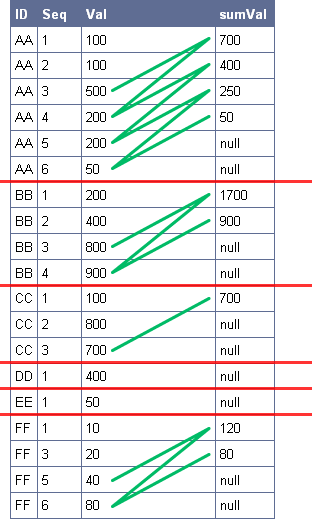
同じIDで、Seqの昇順で、2行後から3行後までのValの合計を求めますので、「表別名がbの行のSeq >= 表別名がaの行のSeq」かつ「間にある行数(両端の表別名がbの行と表別名がaの行を含む)が3以上4以下」ならSum関数の集計対象と考えてSQLを作成しています。
上記のSQLは、having句での条件指定が単純な条件で、かつ、group by句がないので、下記に書き換え可能です。
相関サブクエリを使うSQL2
select ID,Seq,Val,
(select sum(b.Val)
   from IDTable b
  where b.ID=a.ID
    and (select count(case when c.Seq between a.Seq
                                          and b.Seq
                           then 1 end)
           from IDTable c
          where c.ID=a.ID) between 2+1 and 3+1) as sumVal
  from IDTable a
order by ID,Seq;
さらに、必要条件を取り出してチューニングしてもいいでしょう。
相関サブクエリを使うSQL3
select ID,Seq,Val,
(select sum(b.Val)
   from IDTable b
  where b.ID=a.ID
    and a.Seq < b.Seq -- 必要条件
    and (select count(case when c.Seq between a.Seq
                                          and b.Seq
                           then 1 end)
           from IDTable c
          where c.ID=a.ID) between 2+1 and 3+1) as sumVal
  from IDTable a
order by ID,Seq;
SQLのイメージは下記です。
SQLのイメージ
3問目と同様に、検索case式をIF関数を使って変形したり、論理値を使って変形したりしてもよいでしょう。